Beyond the turnaround
Client: Pāmu
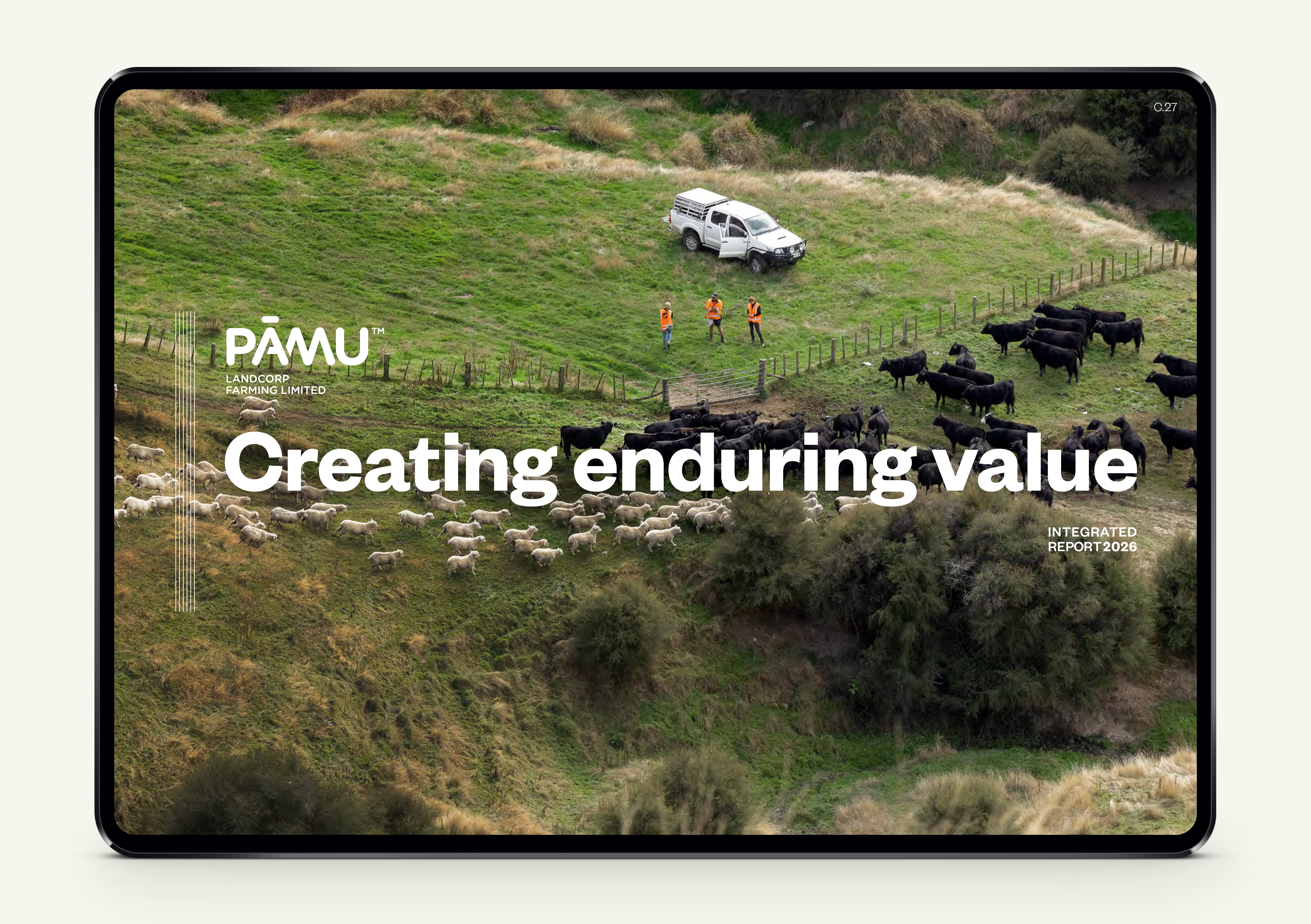
The 2026 Integrated Report for Pāmu reflects a business moving into a more settled phase: one where commercial discipline, integrated thinking and clearer lines of sight between strategy and action help explain how value is being created over time.
The Brief
The Pāmu 2026 Integrated Report needed to build on the strong reporting direction established in recent years while signalling an important shift in the business narrative.
The task was no longer to tell a turnaround story. It was to reflect a business on firmer footing: commercially focused, increasingly consistent in its operating performance, and clear about how that performance creates enduring value for New Zealand.
That commercial framing sat at the heart of the brief. Government stakeholders remained a priority audience, alongside staff, customers, suppliers, partners and the wider public. The report needed to align clearly with the Statement of Corporate Intent and present performance in a way that was direct, evidence-based and accessible.
It also needed to evolve the established report structure without losing what was already working well. This year’s report refined key front-end elements, including the performance dashboard and value creation model, while keeping people visible throughout rather than confining them to a standalone section.
The Solution
Our response was to help shape the report around a more settled and self-assured expression of the Pāmu story.
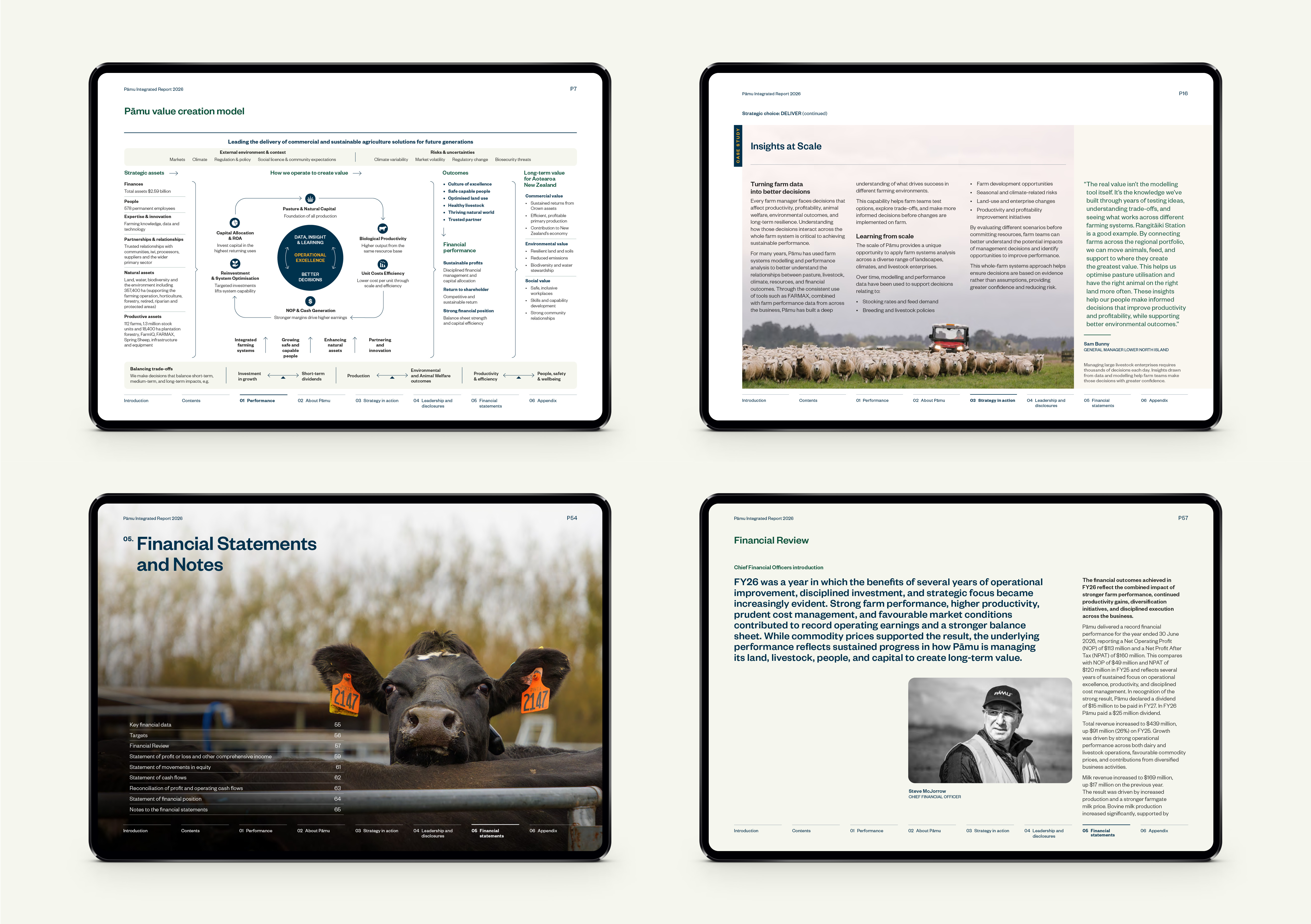
Editorially, that meant keeping a strong commercial centre of gravity throughout. The report stays focused on the practical drivers of performance: productivity, profitability, capability, land use, risk and stewardship. Just as importantly, it incorporates integrated thinking into the storytelling, making the relationships between purpose, strategy, operations and long-term value creation easier to follow.
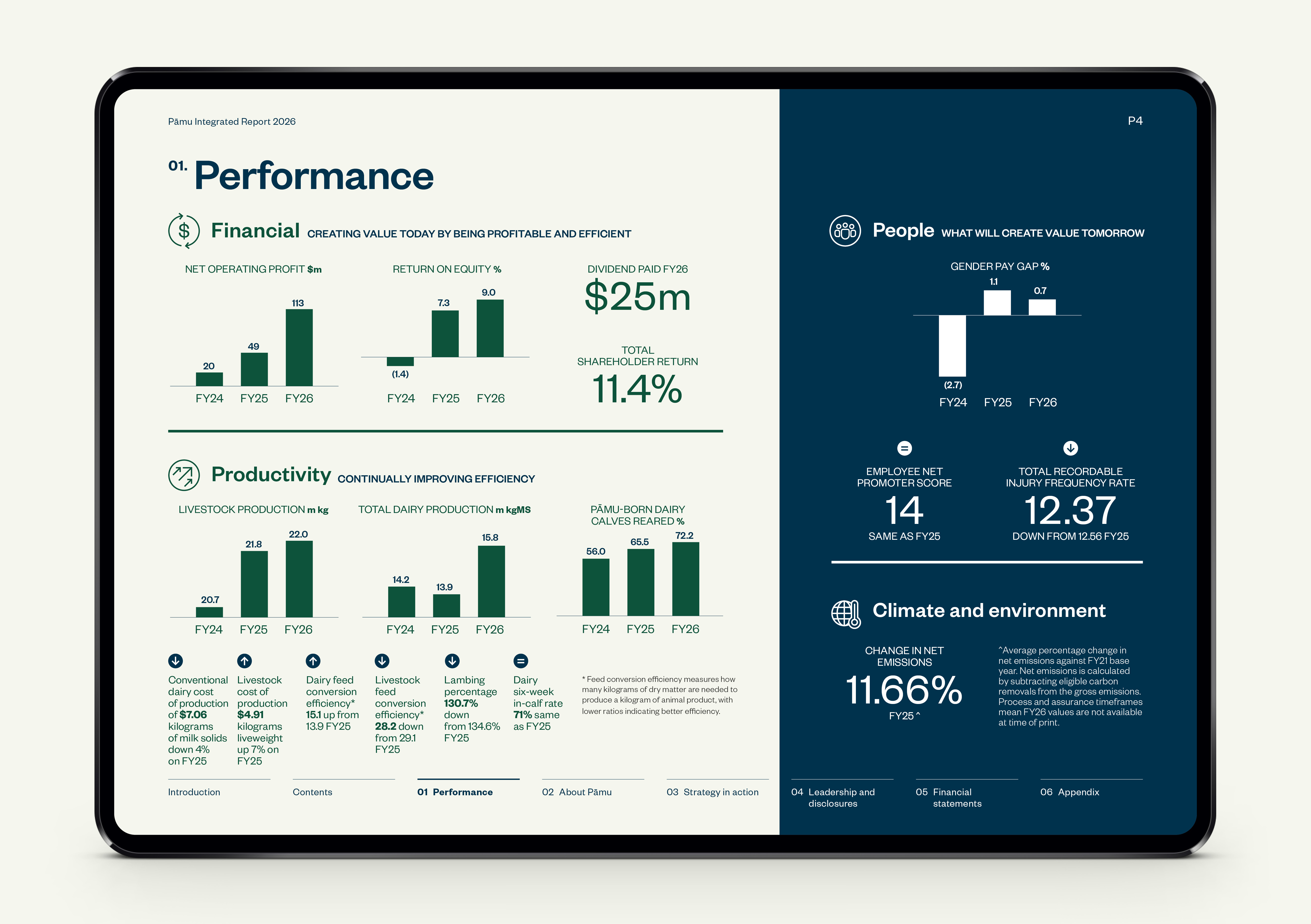
That joined-up approach is evident from the front end. The opening performance dashboard builds on the previous year’s format, but tells a clearer story by pairing headline metrics with trend and comparative context. Feature text pull-outs help signal the most important messages, while concise captions support skim reading and make dense information easier to absorb. The updated value creation model adds another layer of coherence, helping show how resources, operating choices and outcomes relate to one another.
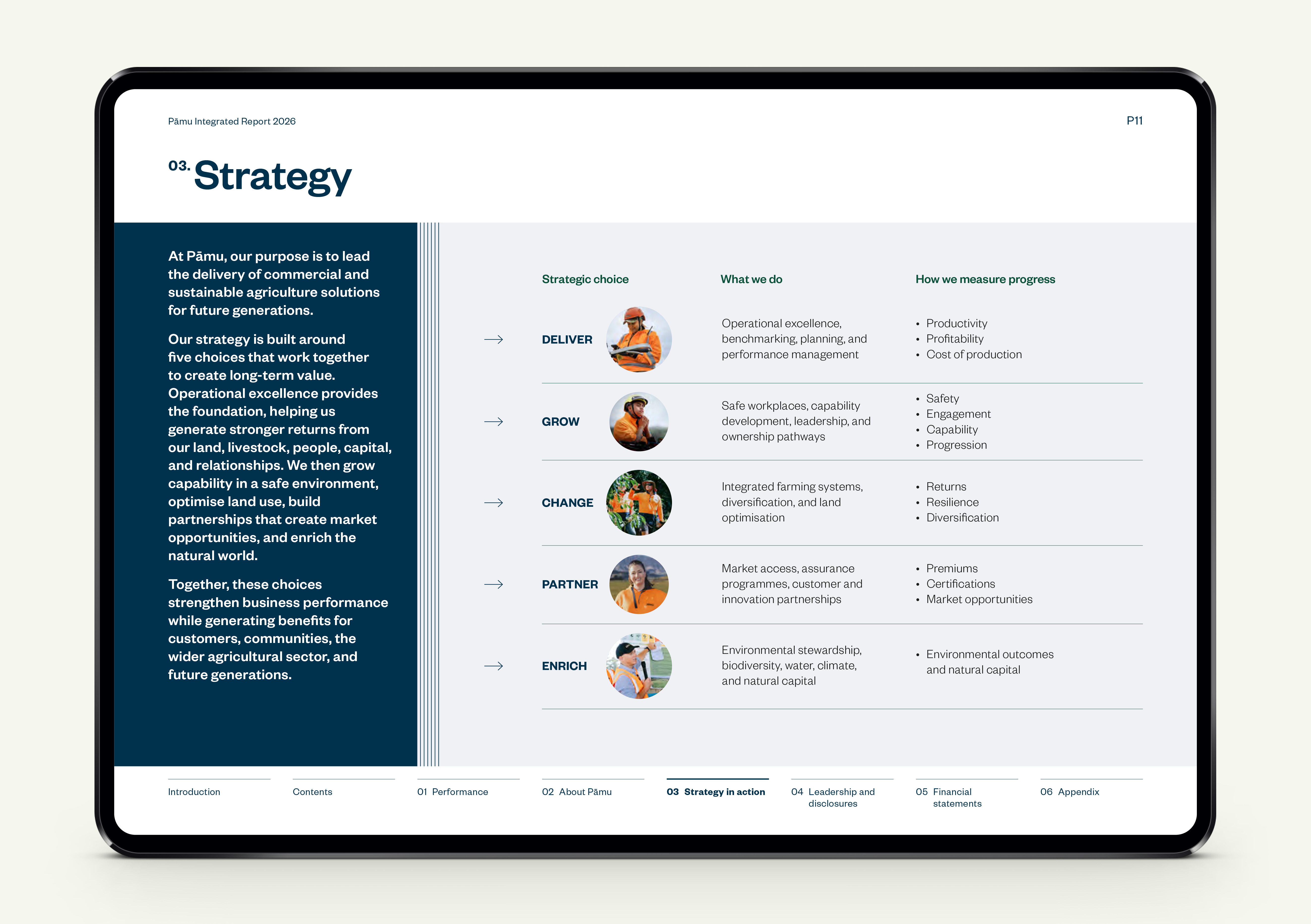
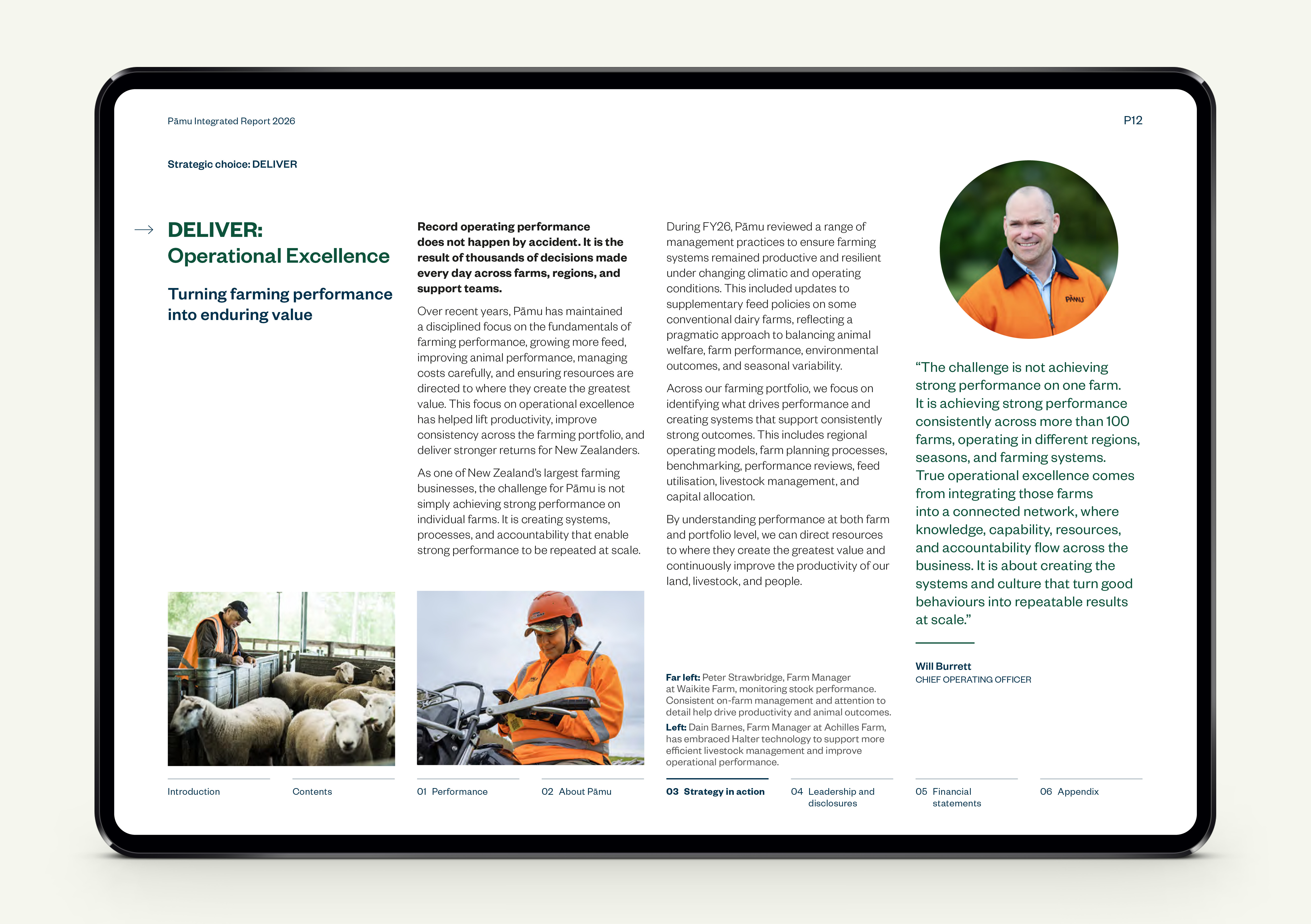
The strategy chapters then carry that integrated reporting logic into the body of the document. Organised around the five strategic choices for Pāmu — DELIVER, GROW, CHANGE, PARTNER and ENRICH — they create stronger lines of sight between what the business is trying to achieve and what it is doing in practice.
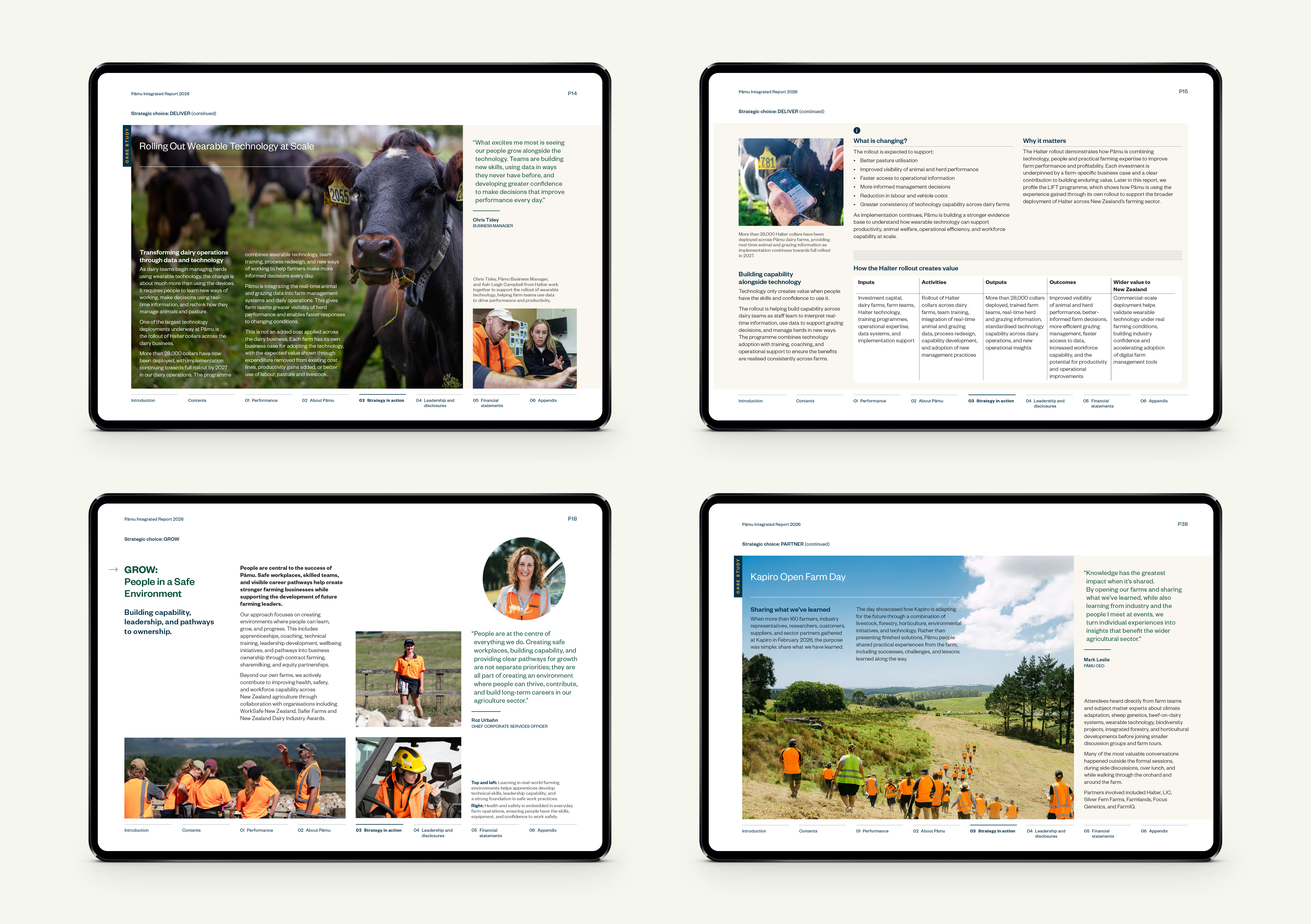
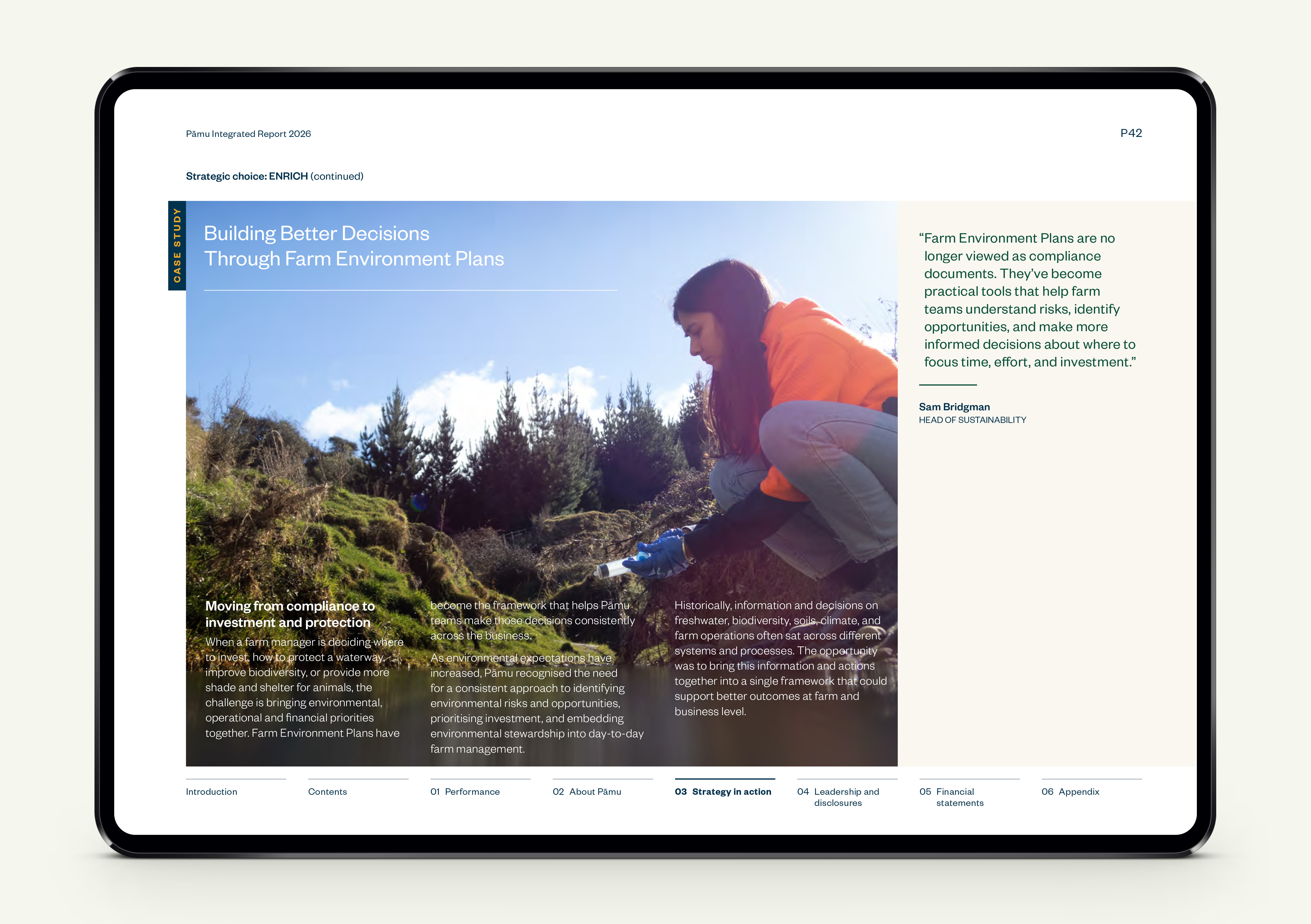
Case studies are central to that. Positioned within the strategy chapters, they act as tangible examples of strategy being activated on the ground. Initiatives such as wearable technology, critical risk management, beef-on-dairy, open farm days and Farm Environment Plans show how specific actions support the purpose of Pāmu, advance strategic priorities and contribute to the commercial drivers of the business.
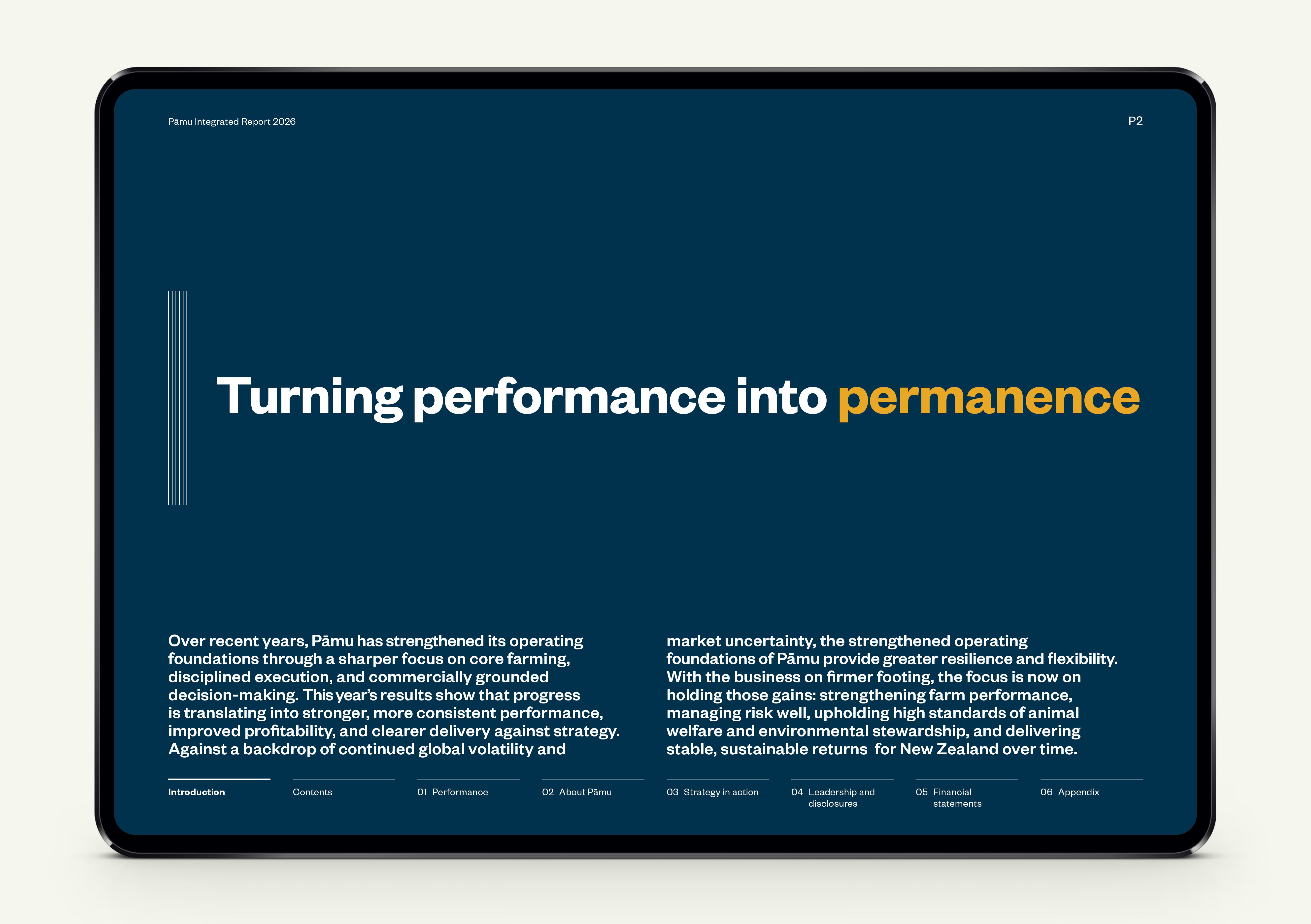
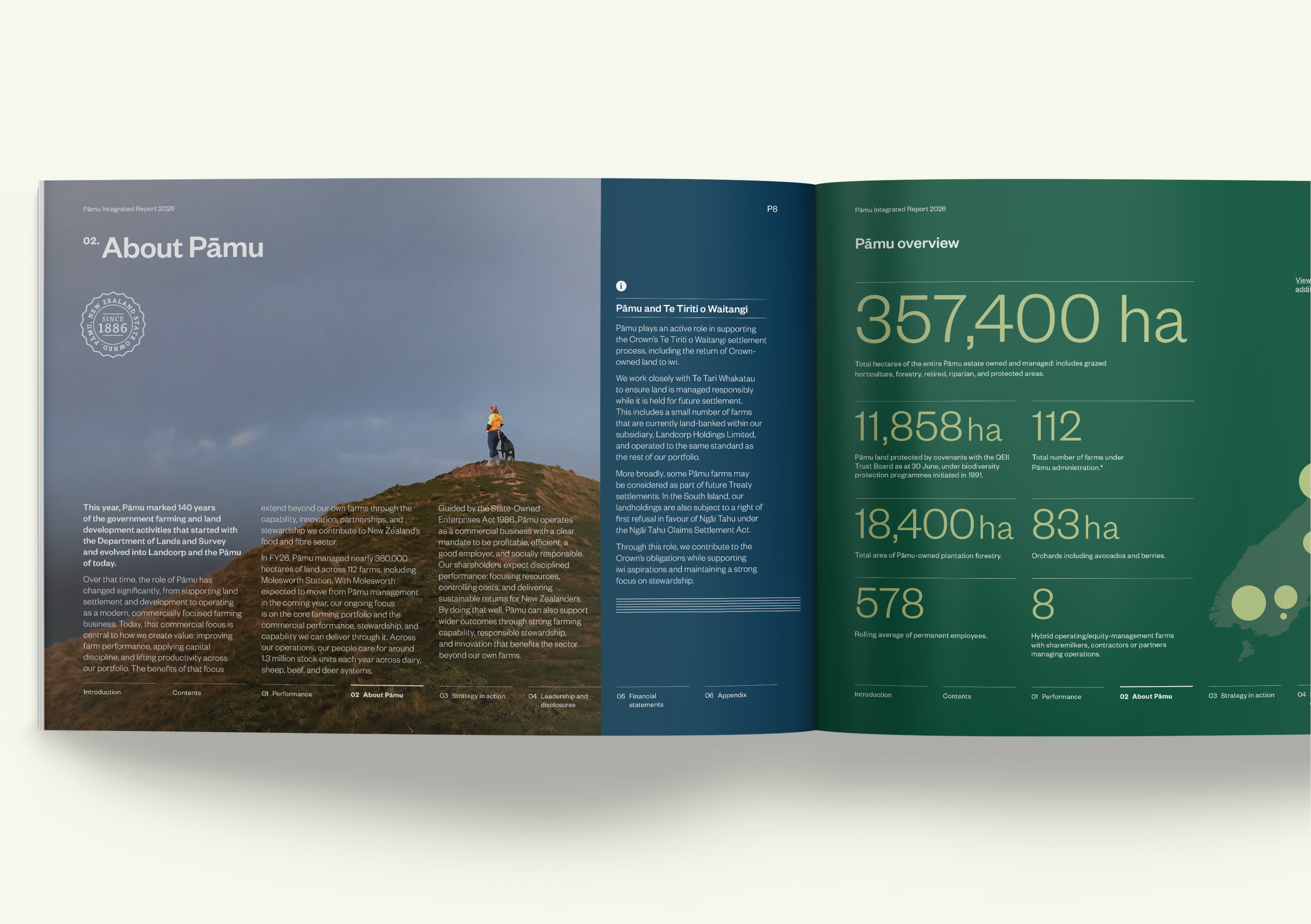
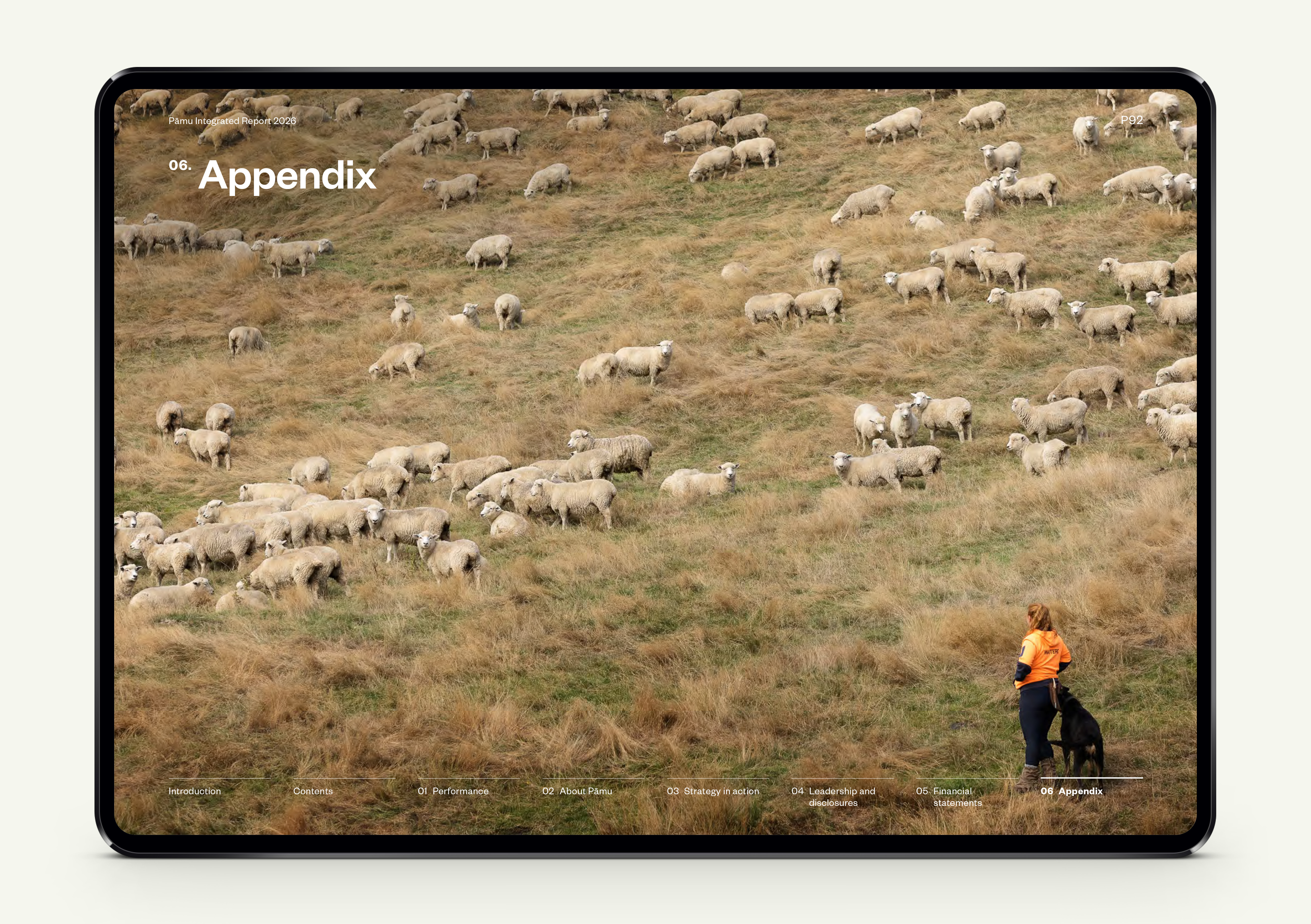
Visually, the design reinforces that sense of firmer footing. Headline typography is bold, clear and uncomplicated, supporting a more confident expression of the business story. Imagery has been used expansively but with restraint, conveying the national scale of the operation while staying purposeful and activity-focused. Selective use of circular image devices helps draw attention to the leaders responsible for delivering the five strategic choices, while arrow graphics and other wayfinding cues suggest progression and alignment throughout the report. Tonal shifts within the colour palette help create visual pace and bring forward key moments across a large volume of information.
A further strength of the project was the written content developed by the client team. Agreeing the editorial intent early helped keep the report focused and disciplined, with strong alignment to strategy, the value creation model and the business drivers behind performance.
The Results
The final report gives a clear and credible account of where Pāmu stands today and what is driving its performance.
Its strategy-led structure brings together operational, people, environmental and financial content in a way that feels connected and purposeful. The stronger use of dashboards, scorecards and commercially grounded editorial also makes the report easier for time-poor readers to navigate, while keeping the substance intact.
More broadly, the report reflects Pāmu in a way that feels well aligned to the brief: practical, disciplined and clear-eyed about performance, while still recognising the people, land and long-term stewardship that sit behind it.